The short answer: No — French is not the mother language of English. But French shaped English so profoundly that millions of people who use an old English translator every day are staring at the evidence without realizing it. Here's the full story — and it's stranger, bloodier, and more beautiful than the textbooks let on.
What You Need to Know First (Bottom Line Up Front)
If you've ever typed a phrase into an English translator and noticed how many English words sound oddly French — justice, liberty, language, translation — you've already felt the fingerprints of history on your keyboard.
English is not a daughter of French. But English spent centuries in the same house as French, eating at the same table, sleeping in the same bed, and borrowing French clothes it never returned.
The English language is, at its bones, a Germanic language — the same family as German, Dutch, and Old Norse. But its wardrobe is largely French, and its address book is stuffed with Latin. Understanding this distinction changes everything about how you see the language you speak, translate, and read every single day.
The Story Begins Long Before Any English Translator Existed
Picture Britain around 450 AD. The Roman legions have pulled out. The island is cold, wet, and fragmented. Into this vacuum sail the Anglo-Saxons — Germanic tribes from what is now northern Germany and Denmark: the Angles, the Saxons, the Jutes.
They spoke what we now call Old English — a language that sounds almost nothing like modern English. If you fed Old English into a translator today, German speakers would recognize chunks of it before English speakers would.
This is where English comes from. Not from France. Not from Latin. From Germanic farmers, warriors, and fishermen who crossed the North Sea and carved out a new home.
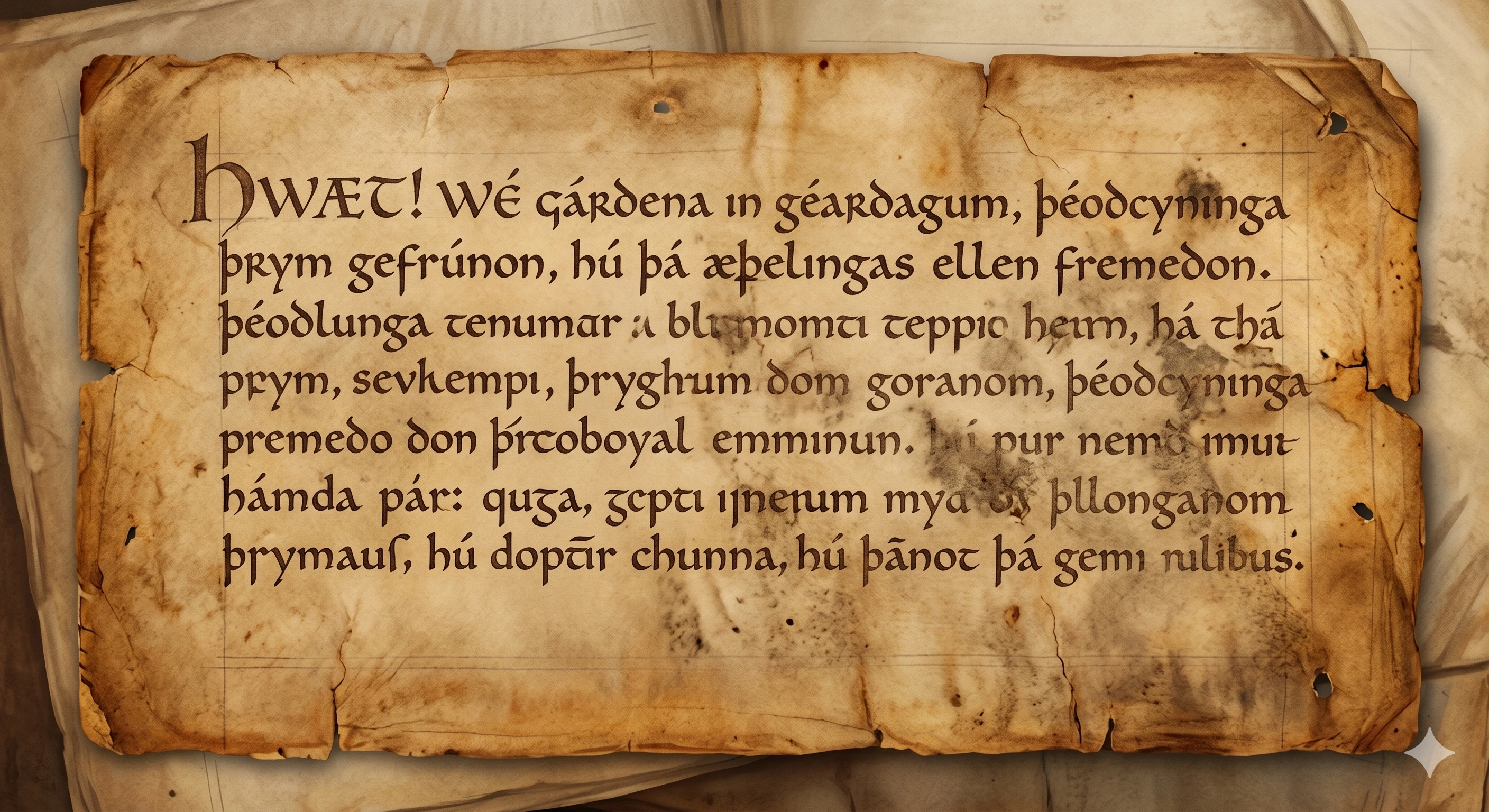
The word English itself comes from "Angles." Englaland — land of the Angles — became England. The language of the Angles became Englisc, then English.
For about six centuries, Old English evolved largely on its own. It absorbed some Latin from Christian missionaries (words like church and bishop). It absorbed Old Norse from the Vikings who raided, settled, and eventually merged with the population (words like sky, egg, knife, they). But it remained fundamentally Germanic in structure — its grammar, its core vocabulary, its rhythm.
Then came 1066. And everything changed.
The Year That Put French Words in Your English Translator
On October 14, 1066, William the Conqueror — Duke of Normandy, a region of France — defeated King Harold at the Battle of Hastings and became King of England.
This was not just a change of government. It was a language earthquake.
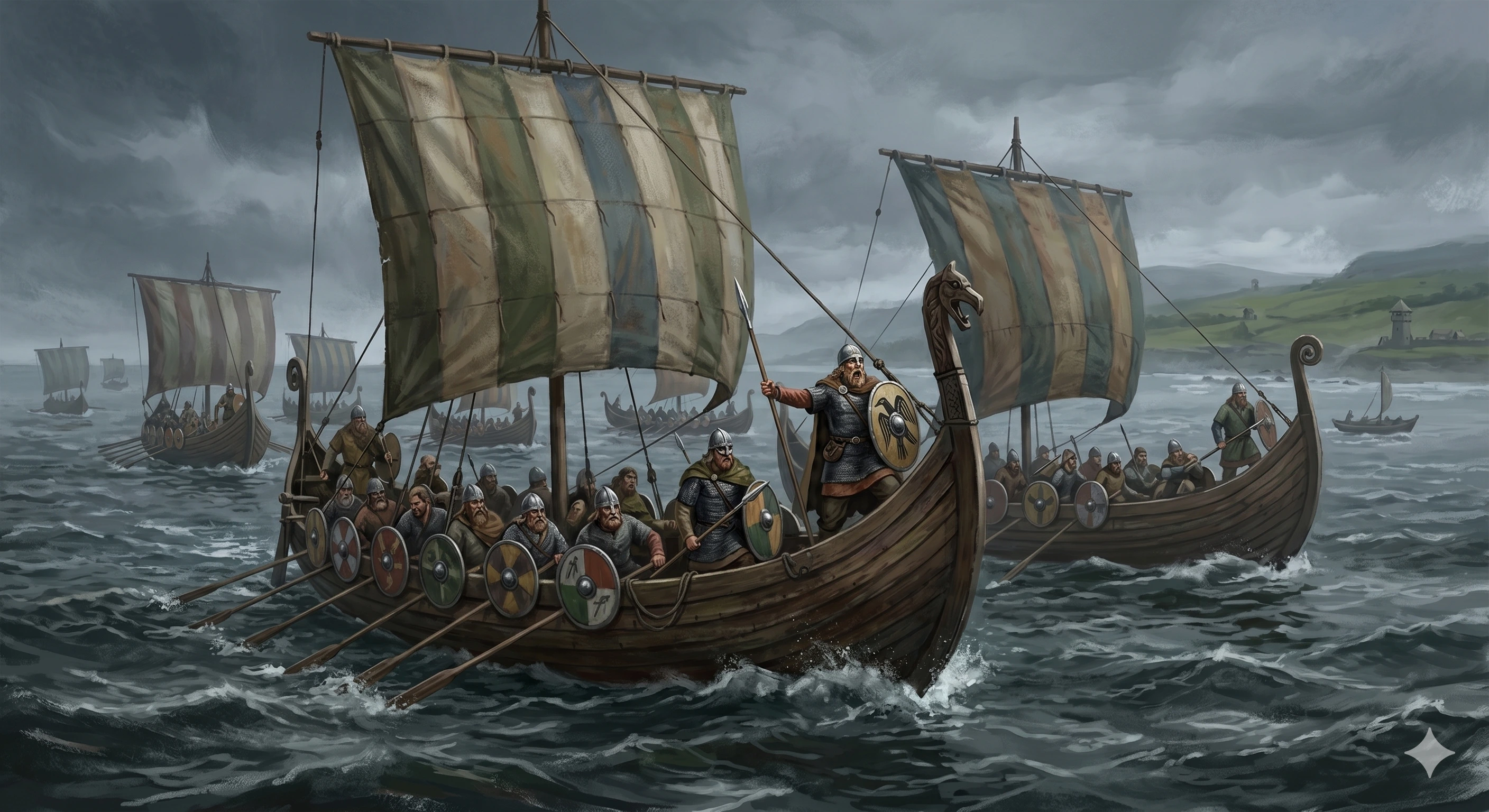
The Norman ruling class spoke Old French (specifically the Norman dialect). Suddenly, French became the language of the court, the law, the church, the military, the aristocracy. English — spoken by the common people — was pushed down the social ladder. If you want to translate english to anglo-saxon to see how the language looked before this massive French integration, you can strip away these foreign layers using our guides. Indeed, attempting to convert your daily english to anglo saxon vocabulary will reveal just how much of our basic speech remains purely Germanic despite the French invasion.
For roughly 300 years, England was effectively bilingual. French sat at the top. English survived at the bottom.
Here's what that centuries-long linguistic layering produced — a pattern you'll notice if you compare Old English words to their French-influenced replacements:
| Germanic (Old English) | French-influenced English | What it reveals |
|---|---|---|
| kingly | royal | French ruled the court |
| holy | sacred | French influenced the church |
| help | aid | Both survive today with different social weights |
| cow, sheep, pig (animals) | beef, mutton, pork (the meat) | Anglo-Saxons raised the animals; Normans ate the meat |
That last example tells the whole class story in a single dinner plate. The English peasant tended the cow. The French-speaking Norman lord ate the beef. Both words survived, carrying the memory of a divided society in their very syllables.
By the time French and English finally merged into Middle English — the language of Chaucer, spoken around 1300–1500 — English had absorbed roughly 10,000 French words. Modern English vocabulary is estimated to be 28–29% French in origin.
So no, French did not birth English. But French rewired its vocabulary in a transformation that no English translator can fully reverse.
Are the English Descended from French People?
This is the question that sounds like a simple yes/no but actually demands a story.
The straightforward answer: Most English people are not primarily descended from French people. The Normans who invaded in 1066 were a relatively small ruling class — historians estimate somewhere between 8,000 and 15,000 warriors and settlers. England's population at the time was somewhere around 1.5 to 2 million.
The Norman elite had enormous cultural and linguistic impact. They had almost no genetic impact by comparison.
Large-scale genetic studies of the British population — including the landmark 2015 Oxford study — found that the largest ancestral contributions to modern English DNA come from the Anglo-Saxons themselves, with a significant layer of older Celtic British ancestry (the people who were already in Britain before the Anglo-Saxons arrived), and smaller contributions from Scandinavians (the Vikings).
The Norman French left almost no detectable genetic signature in the modern English population. They arrived, ruled, intermarried with the existing elite, and within a few generations had been absorbed — culturally, linguistically, and genetically — into the English people they had conquered.
What they left behind was not DNA. It was vocabulary. Institutions. The legal system. Architecture. And thousands of words that now flow through English so naturally that most English speakers never recognize them as imports.
Where Did the English Really Come From? A Longer View
If you zoom out further, the ancestry of the English people becomes a layered story that stretches back millennia:
Layer 1: Ancient Hunter-Gatherers
The deepest roots of British ancestry trace to Mesolithic hunter-gatherers who arrived after the last Ice Age, around 10,000–12,000 years ago. These were people physically similar to modern Europeans, leaving traces in the DNA of people across Britain today.
Layer 2: The First Farmers
Around 4000 BC, farmers from Anatolia (modern Turkey) migrated into Britain, bringing agriculture, stone monuments, and new genetic lines. These are the people who built monuments like Stonehenge.
Layer 3: The Bronze Age Steppe People
Around 2500–2000 BC, herders from the Eurasian steppe — genetically related to groups from what is now Ukraine and Russia — swept into Britain and made such a dramatic genetic impact that they replaced much of the earlier farming population.
Layer 4: The Iron Age Celts
Celtic culture and language spread across Britain in the Iron Age. The pre-Roman Britons spoke Celtic languages related to modern Welsh, Cornish, and Gaelic. Their genetic legacy persists most strongly in Wales, Scotland, and Ireland.
Layer 5: The Romans
Rome occupied Britain from 43 AD to around 410 AD. Roman soldiers came from across the empire — Mediterranean, North Africa, the Middle East — but left a limited genetic trace. Their lasting impact was on roads, cities, Latin vocabulary, and Christianity.
Layer 6: The Anglo-Saxons
The groups who matter most for the English people as a distinct identity. Their migration, from about 400–600 AD, brought the Germanic language that became Old English, and their DNA became a major component of the modern English genetic profile.
Layer 7: The Vikings
Scandinavian settlers, especially in northern and eastern England (the Danelaw), added Norse genes and Norse words. Words like window (from Old Norse vindauga, "wind eye") are their linguistic gifts to every English translator alive today.
Layer 8: The Normans
Cultural and linguistic transformation. Minimal genetic addition.
The English, in short, are a beautifully complicated people — Western European at the base, Germanic in language and core identity, touched by Scandinavia, skimmed by Normandy, and carrying 10,000 years of accumulated human migration in their blood and their words.
Why This Matters for the Language You Translate Every Day
Understanding the origins of English explains something that confuses everyone who works with translation:
Why does English have so many synonyms?
English has begin, start, and commence. The first is Old English. The second is Old Norse. The third is French. All three mean approximately the same thing, but they carry different registers — different social weights left over from the classes of people who originally used them.
If you're using an old English translator to work with medieval texts, you're navigating this layered history in real time. Old English texts — like Beowulf, written around 700–1000 AD — read almost like a foreign language to modern eyes. That's because they predate the French flood. Middle English texts — like Chaucer's Canterbury Tales, written around 1390 — sit at the fascinating point where Old English grammar and French vocabulary are still negotiating with each other.
Modern English is what emerged from that negotiation: a hybrid language with a Germanic skeleton and a largely French-and-Latin wardrobe, using a writing system inherited from Rome, with grammar simplified by centuries of people speaking multiple languages across a shared island.
It is, by any measure, one of the most remarkable linguistic hybrids in human history.
The Three Questions, Answered Clearly
Is French the mother language of English?
No. English is a Germanic language descended from the speech of Anglo-Saxon migrants. French deeply influenced English vocabulary — particularly after 1066 — but French did not give birth to English. A language can shape a child without being its parent.
Are the English descended from French people?
Mostly no. The Norman French who conquered England in 1066 were a small ruling class who had enormous cultural impact but contributed relatively little to the genetic makeup of the modern English population. The English are descended primarily from a layered sequence of migrations — ancient hunter-gatherers, Bronze Age steppe people, Celts, and most significantly for English identity, the Anglo-Saxons.
Where did the English come from?
Ultimately, from everywhere — like most peoples. But the English as a culturally distinct group emerged from the Anglo-Saxon settlement of Britain between the 5th and 7th centuries AD, shaped by subsequent waves of Viking influence and Norman French cultural transformation, all layered on top of thousands of years of prior human habitation.
A Closing Thought
Every language is a history of contact — of peoples meeting, clashing, trading, marrying, conquering, and being conquered. English is an extreme example: few languages have absorbed so many outside influences while remaining so distinctly itself.
The next time you open an English translator or reach for the right word in English, you're touching that history. The Germanic bones. The French muscle. The Latin sinew. The Norse idiom hiding inside a phrase you've used a thousand times without knowing it.
English isn't the daughter of French. It's something stranger and more interesting: a language that was built by many peoples, shaped by conquest, and carried forward by ordinary people who kept speaking even when the rulers spoke a different tongue.
That resilience — the stubbornness of common speech — is written into every word.
Academic References & Further Reading
- 📖 Explore historical Anglo-Saxon vocabulary in the Bosworth-Toller Old English Dictionary.
- 🎓 Review linguistic research and texts at the Dictionary of Old English (DOE) Project at the University of Toronto.
- 🏛️ Verify historical medieval names and etymologies using the Prosopography of Anglo-Saxon England (PASE).
- 🎭 For Shakespearean and Elizabethan studies, consult resources at the Folger Shakespeare Library and Shakespeare's Words dictionary.