Name Generator
Ancient & modern names across 9 languages
Choose a language & gender, then generate
◆ Old English Form
Looking for an authentic, free Name Maker with real meanings, real history, and real Anglo-Saxon roots? You have found it. At PartnerHoursGuide.com, our Name Maker tool is built from the most authoritative academic databases of ancient English names — the Prosopography of Anglo-Saxon England (PASE) and Behind the Name. Whether you need name ideas for a baby, a fantasy character, a novel, or simply want to explore the name history behind a word your family has carried for generations — our Name Maker is here to help.
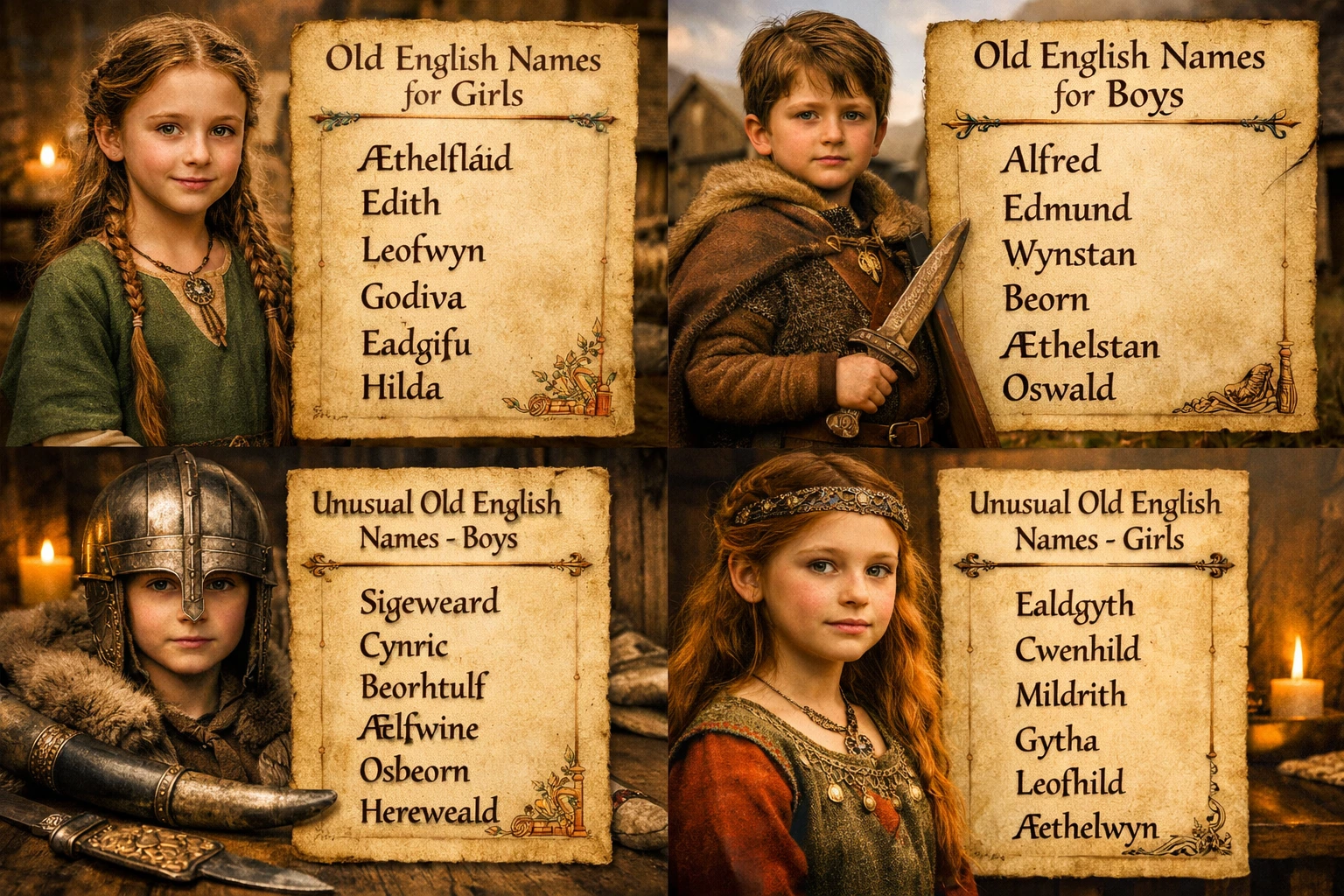
Every name in this guide is attested — meaning real people actually bore these names, documented in charters, royal genealogies, and the Domesday Book. These are not invented words. They are living fragments of English history.
Name Maker — Ancient Anglo-Saxon Names With Meanings
What Is the Name Maker Tool?
The Name Maker is a specialized name finder tool that returns historically documented Anglo-Saxon names — complete with meanings, gender, etymology, and era. Unlike a generic name randomizer that assembles plausible-sounding syllables, our Name Maker draws from real recorded names of real people.
The Name Maker at PartnerHoursGuide.com lets you filter by:
- Gender — male names, female names, or unisex
- Name element — the Old English root word at the heart of the name
- Era — Anglo-Saxon, Medieval English, or Modern English revival
Every result includes the full name meaning, its compound elements, its usage period, and a pronunciation button — so you can both read and hear the name before choosing it.
The Origins and Name History of Old English Names
Where Do Old English Names Come From?
Old English names are drawn from the West Germanic language spoken by the Anglo-Saxons — the Angles, Saxons, and Jutes who migrated to Britain from continental Europe in the 5th century. This language, which we call Old English, was the direct ancestor of modern English and was spoken across England from approximately 450 AD to 1150 AD.
The name history of this period is remarkable. Anglo-Saxon names were not single words — they were compound poems. Two meaningful elements were fused together to create a name that expressed a quality, a hope, or a destiny:
- ælf (elf) + ræd (counsel) = Ælfræd — the root of Alfred
- æðele (noble) + flæd (beauty) = Æthelflæd — the Lady of the Mercians
- ead (wealth, fortune) + wine (friend) = Eadwine — the root of Edwin
This is what makes Old English names so distinctive among ancient english names: every name carries a compressed name story inside it.
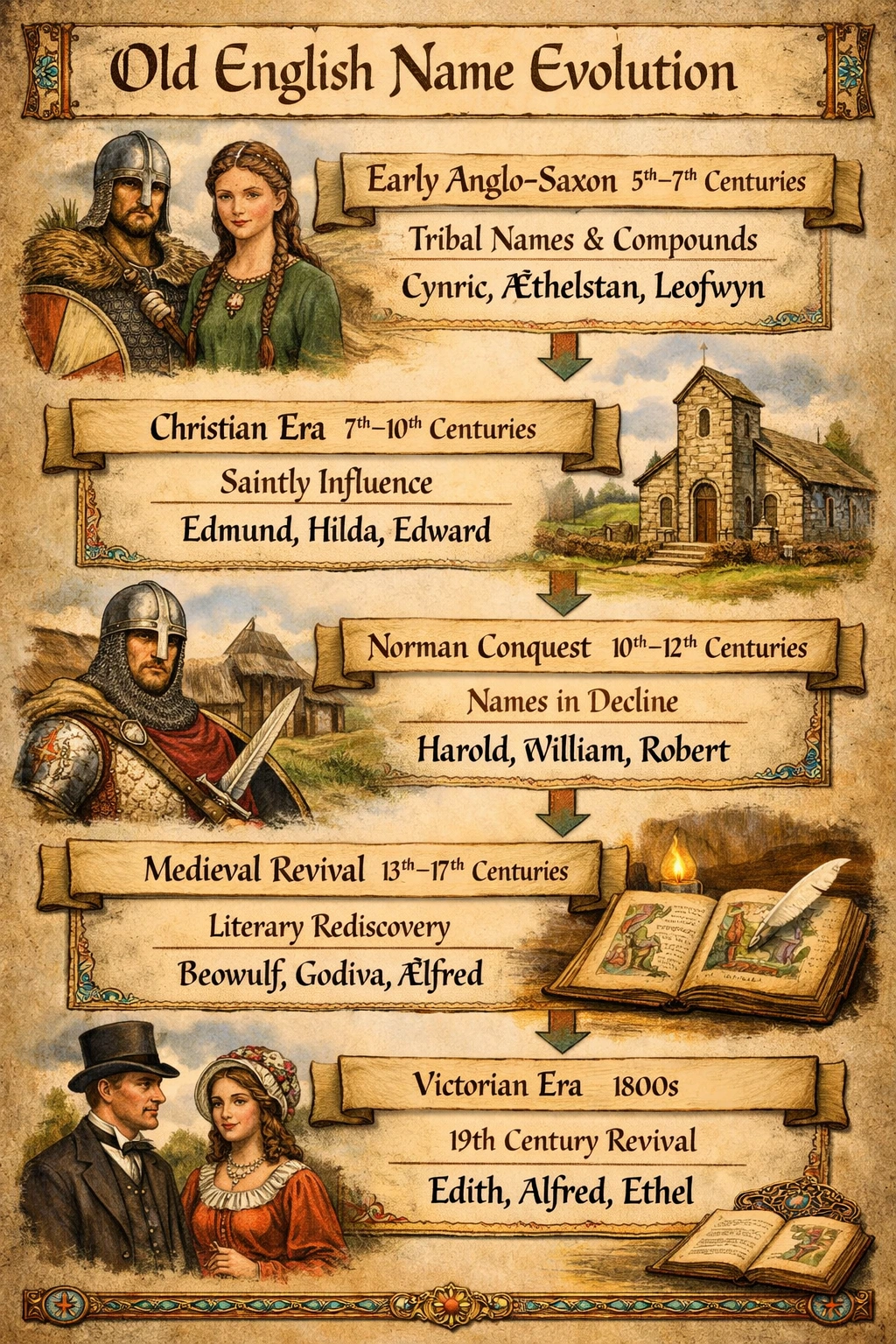
The Anglo-Saxon Naming Tradition (5th–10th Century)
The earliest Old English names on record appear in 7th-century church documents and royal charters. Names like Acca (Bishop of Hexham, 709–731) and Æbbe (Abbess of Coldingham, d. 683) appear in the writings of the Venerable Bede — our oldest narrative source for Anglo-Saxon England.
Noble and royal families practised alliterative naming — recycling a shared first element across generations to signal dynasty and descent. The House of Wessex, for example, built a dynasty of names around æðele (noble) and ælf (elf): Æthelred, Æthelstan, Ælfræd, Ælfwine — a living genealogy written in language.
The most celebrated bearers of these ancient english names include:
- Alfred the Great (Ælfræd) — scholar-king of Wessex, defender against the Vikings
- Æthelflæd — Lady of the Mercians, military commander and daughter of Alfred
- Æthelstan — first King of all England, r. 927–939
- Beowulf — the legendary hero of the greatest Old English epic poem
How the Norman Conquest Changed English Names (1066)
When William the Conqueror invaded in 1066, he brought an entirely different naming culture. Norman French names — William, Robert, Richard, Henry — rapidly replaced the Anglo-Saxon naming stock. Within two generations, old family names of Anglo-Saxon origin had nearly vanished from the nobility.
Some survived through transformation. Ælfræd became Alfred. Æðelþryð softened into Audrey. Ælfwine compressed into Alvin. These modern English names are the living descendants of their Old English ancestors — the same name story told in a new tongue.
The Victorian Revival
The 19th century brought a romantic rediscovery of Anglo-Saxon heritage. Parents, writers, and scholars revived names like Aldous, Algar, Edith, and Athelstan — drawn by the same longing for authentic English identity that later drove Tolkien's deep study of Old English. Many of the most popular english female names and male names of the Victorian era were, in fact, Old English revivals.
So You Want to Create Good Old English Character Names?
If you are a writer looking for fantasy book character names rooted in something real — not invented — Old English is one of the richest sources available. Understanding how the name finder system works gives you the tools to build your own names from scratch, or to use our tool intelligently.
The Element Architecture
Old English names are built from roughly 80 attested elements. Combine any two and you have a historically plausible name. Here are the most productive:
First elements (the "front" of the name):| Element | Meaning | Example |
|---|---|---|
| Ælf- | elf, supernatural | Ælfræd (Alfred) |
| Æðele- | noble, excellent | Æthelflæd |
| Beorht- | bright, shining | Beorhtric |
| Ead- | wealth, fortune | Eadwine (Edwin) |
| Eofor- | boar (warrior) | Eoforic |
| Os- | god, divine | Oswald |
| Wulf- | wolf, fierce | Wulfric |
| Beorn- | warrior, nobleman | Beornræd |
| Element | Meaning | Example |
|---|---|---|
| -flæd | beauty | Æthelflæd |
| -friþ | peace | Æðelfrið |
| -gar | spear | Ælfgar (Algar) |
| -giefu | gift | Ælfgifu |
| -heard | hard, brave | Burgheard |
| -hild | battle | Ælfhild |
| -mund | protector | Ceolmund |
| -ræd | counsel, wisdom | Ælfræd |
| -ric | ruler, king | Ælfric |
| -stan | stone | Æthelstan |
| -weard | guardian | Ælfweard |
| -wine | friend | Ælfwine |
| -wulf | wolf | Æðelwulf |
| -wynn | joy | Ælfwynn |
Rules for Writers Building Character Names
Rule 1 — Status matters. Noble and royal characters had long compound names. Common people, servants, and craftsmen often had short single-element names like Acca, Bada, or Adda. Use name length to signal social class.
Rule 2 — Use alliterative families. If characters are related, give them names sharing a first element. Æthelflæd and Æthelstan feel like siblings — because historically, they were (both children of Alfred the Great).
Rule 3 — Match the element to the character. A cunning advisor might carry -ræd (counsel). A fierce warrior might carry wulf- (wolf) or -hild (battle). A good character names female might draw from -wynn (joy) or ælf- (elf). A book character names male might use beorn- (warrior) or os- (god).
Rule 4 — Use the tool. Rather than building from scratch, the name finder at PartnerHoursGuide.com functions as both a name finder and a fantasy characters generator — filtering by element theme so you can match names to personalities.
10 Old English Names From Our Name Finder for Inspiration
These ten names come from genuine historical records. Each carries centuries of name story behind it.
1. Æthelflæd (f) — Noble Beauty
Elements: æðele + flæd | Era: Anglo-Saxon
Daughter of Alfred the Great. Lady of the Mercians. Military commander against the Vikings. One of the most powerful women in early medieval Europe. For a good character names female who leads.
2. Beowulf (m) — Bear
Elements: beo + wulf | Era: Anglo-Saxon
Hero of the 8th-century Old English epic. The ultimate book character names male — a warrior who slays monsters and accepts his own mortality with grace.
3. Ælfwynn (f) — Elf Joy
Elements: ælf + wynn | Era: Anglo-Saxon
Daughter of Æthelflæd, briefly ruled Mercia. For ethereal female names with supernatural undertones — one of the most beautiful popular english female names from the Anglo-Saxon era.
4. Aldous (m) — The Ancient One
Elements: eald | Era: English (Medieval, revived Victorian)
One of the great old short names — simple, literary, distinctive. Aldous Huxley brought it into the 20th century. Still genuinely unusual among male names today.
5. Æbbe (f) — Strength of a Boar
Elements: eofor + beorn | Era: Anglo-Saxon
Abbess of Coldingham, d. 683. One of the earliest named women in English ecclesiastical history. A perfect old woman's names with genuine historical weight.
6. Æðelmær (m) — Noble and Famous
Elements: æðele + mære | Era: Anglo-Saxon
An 11th-century monk who attempted to fly with a gliding apparatus — the first recorded aviator. For a character with aristocratic boldness. Outstanding among male english names and meaning.
7. Ealdgyð (f) — Old Battle
Elements: eald + guð | Era: Anglo-Saxon
A warrior woman's name. The name story here is ancient power — inherited strength from a long line. Survived into the Medieval period as Aldith. Rich with the female names and meaning in english tradition.
8. Æthelstan (m) — Noble Stone
Elements: æðele + stan | Era: Anglo-Saxon
First King of all England. The name of a unifier. An outstanding choice among ancient english names for a character who brings order out of chaos.
9. Ælfgifu (f) — Elf Gift
Elements: ælf + giefu | Era: Anglo-Saxon
First wife of King Æthelred II. Romantic, otherworldly, grounded in royal history. One of the finest name ideas for parents seeking a genuinely rare English name.
10. Acca (m) — Oak
Elements: æc | Era: Anglo-Saxon
Bishop of Hexham, 709–731. A stone cross from Hexham still bears his name. One of the most usable old short names — just four letters, completely pronounceable, loaded with historical resonance.
Name Finder Results by Category
Old English Female Names
The best female names from the Old English tradition draw from the ælf (elf), æðele (noble), and wynn (joy) elements. These are genuinely popular english female names in the Anglo-Saxon scholarly world:
- Æthelflæd — noble beauty (Lady of the Mercians)
- Ælfwynn — elf joy (ruled Mercia briefly)
- Æbbe — strength of a boar (Abbess of Coldingham)
- Ælfgifu — elf gift (Queen of England)
- Ealdgyð — old battle (powerful noblewoman)
- Ælfþryð — elf strength (Elfreda)
- Ælfswiþ — elf strong
- Ælfhild — elf battle
Use our english name generator to filter these by era and element at PartnerHoursGuide.com.
Old English Male Names
Strong, compound male names from the Anglo-Saxon tradition — a rich source of name ideas for characters and babies alike:
- Beowulf — bear (the great epic hero)
- Æthelstan — noble stone (first King of England)
- Ælfræd (Alfred) — elf counsel (Alfred the Great)
- Æðelwulf — noble wolf (King of Wessex)
- Aldous — the ancient one (Victorian revival)
- Acca — oak (Bishop of Hexham)
- Ælfric — elf ruler (Archbishop of Canterbury)
- Beornræd — warrior counsel
Unusual Old English Boy Names (Including 1800s Revival Names)
For parents seeking name ideas well outside the mainstream — these unusual male names have genuine Old English roots and Victorian revival credentials:
- Aldous — literary, distinctive, used in East Anglia since the Middle Ages
- Algar — elf spear, briefly revived in the 19th century
- Athelstan — noble stone, modernised Victorian spelling
- Barclay — birch clearing, from an Old English place name
- Burton — fortified town
Unusual Old English Girl Names
For good character names female or distinctive baby names:
- Æbbe — rarely used, historically grounded
- Bealdhild — bold battle-maiden
- Ælfwynn — elf joy
- Ælfswiþ — elf strong
- Æðelflæd — noble beauty (for the genuinely bold)
Old Family Names With Old English Roots
Many modern old family names that feel classically English trace back to Anglo-Saxon personal names used as surnames after the Conquest. Aldous, Edgar, Edwin, Alvin, Audrey, and Ethel all carry Old English DNA. Our name translator section at PartnerHoursGuide.com helps you trace the Old English root behind a modern English name.
Looking for More Good Old English Names? Use the Full Name Finder
This post gives you a foundation. For the full experience — hundreds of attested names, filterable by gender, element, and era, with pronunciation audio — use the tools below.
1. Free Name Finder
The free name generator at PartnerHoursGuide.com/old-english-names is the best name finder for historically accurate Anglo-Saxon names. Filter, generate, randomize, and listen to every name spoken aloud. It works as both a name ideas generator for parents and a fantasy characters generator for writers. Let our name finder at PartnerHoursGuide.com be your guide.
2. Old English Translator
Understanding the language behind the names adds a dimension no name list can give. Use our Old English Translator Tool as a name translator — enter a modern English word and discover its Anglo-Saxon equivalent, which may itself become a name.
3. Old English Words We Still Use Today
Discover how much of everyday modern English descends from the Anglo-Saxon tongue. Our post on Old English Words We Still Use Today shows the living legacy of the same language that gave us all of these names.
4. Shakespeare English Translator
Old English naming traditions flowed directly into Early Modern English. Our Shakespeare English Translator bridges the 500-year gap between the two eras.
5. Academic Sources
The Prosopography of Anglo-Saxon England (PASE) at pase.ac.uk documents over 19,000 recorded individuals. Behind the Name provides etymology for hundreds of attested Old English names. Both were used as primary sources for this article and our generator tool.
Name Maker History & Insights
To fully appreciate Anglo-Saxon naming traditions, we must look beyond individual names to see how they influenced modern names, language, and culture.
Old English Last Names
Unlike modern naming systems, traditional Anglo-Saxons did not use hereditary old english last names. Instead, individuals were identified by a single given name, often accompanied by a descriptive byname, a patronymic (father's name), or an occupational tag to distinguish them from others in their village. Over centuries, many of these identifiers evolved into the family names we use today.
Example: The name Wulfricson (literally "son of Wulfric") or Bradford (referring to someone who lived near a "broad ford") are classic examples of how old english last names developed from description and lineage.
Old English Surnames
Hereditary old english surnames only became the norm after the Norman Conquest of 1066. The Normans introduced a formal registry of land and taxation (such as the Domesday Book), which required fixed family lineages. Many families took their old Anglo-Saxon personal names and stabilized them into permanent surnames, or used local geographic features to identify their household.
Example: The surname Alwy (derived from the Old English personal name Ælfgifu, meaning "elf-gift") and the surname Green (originally describing a family residing near the village green) illustrate the transition of old english surnames from descriptions to hereditary titles.
Old English Insults
The Anglo-Saxons were masters of wordplay, and their language was rich with colorful, poetic old english insults. In a culture where verbal duels (called "flyting") were a popular form of entertainment, having a sharp tongue was as highly valued as swordcraft. Insults often targeted a person's character, cleanliness, or lack of wisdom, fusing compound words together to create devastating descriptors.
Example: Insults like Snotgand (meaning a snivelling, mucus-faced person) or Æwærdla (meaning an outlaw, lawbreaker, or morally corrupt individual) show the raw, expressive power of old english insults.
Old English Sheepdog Size
While the terms above relate directly to linguistics, the "Old English" name has also been immortalized in the canine world through the Old English Sheepdog. If you are researching this breed, understanding the typical old english sheepdog size is essential. Developed in England as a pastoral herding dog, they are large, athletic dogs beneath their famously shaggy coats.
Example: An average male old english sheepdog size ranges from 22 to 24 inches (56 to 61 cm) tall at the shoulder, with a weight of 80 to 100 pounds (36 to 45 kg). Females are slightly smaller, standing around 21 to 22 inches tall and weighing between 60 to 85 pounds.
FAQ: Name Maker
What does the old english e represent in early naming conventions?
The old english e was a fundamental vowel sound in Anglo-Saxon orthography. It commonly appeared in diphthongs like ea (meaning "river" or "wealth") and eo (meaning "yew" or "horse"), which were central elements combined by the Name Maker tool to construct historically accurate names like Eadwine and Leofric.
How was the old english g pronounced in historical records?
Pronunciation of the old english g (represented by the yogh character in Middle English transition) varied based on surrounding letters. Before front vowels like e or i, it sounded like the modern "y" (e.g., giefu is pronounced "yief-oo"). In other contexts, it was a hard "g" or a voiced velar fricative sound.
How does the old english a function in compound names?
The short old english a was distinct from the digraph æ (ash). In compounding, elements starting with old english a like ald (old) or æsc (ash tree) were fused with second elements to form names symbolizing wisdom or natural strength.
What runic symbol represents the old english t in Futhorc?
The old english t corresponds to the Tyr rune (ᛏ) in the Anglo-Saxon runic alphabet. It symbolized the god Tiw and victory. In names, this consonant began powerful martial elements like torht (bright or glorious).
What protective qualities did the old english b carry in names?
The old english b is found in name prefixes like beald (bold) and beorn (warrior/nobleman). These elements were selected to invoke bravery, protection, and leadership qualities in the children who bore them.
How was the old english l used in compound naming poetry?
The old english l often served as the link consonant for elements like leof (beloved, dear). Combining old english l elements allowed families to construct beautiful alliterative names that signaled family alignment and affection.
How did the old english d interact with the letter eth (ð) in manuscripts?
In medieval manuscripts, the standard old english d was phonetically distinct from eth (ð) and thorn (þ), which represented th sounds. Names like Cuthbert or Æthelred use these unique dental sounds alongside standard dental old english d elements.