Fancy English Translator
Elevate, embellish, and refine your modern English speech instantly.
✦ Free · No Sign-up · AI-Powered ✦
Elevate Your Words
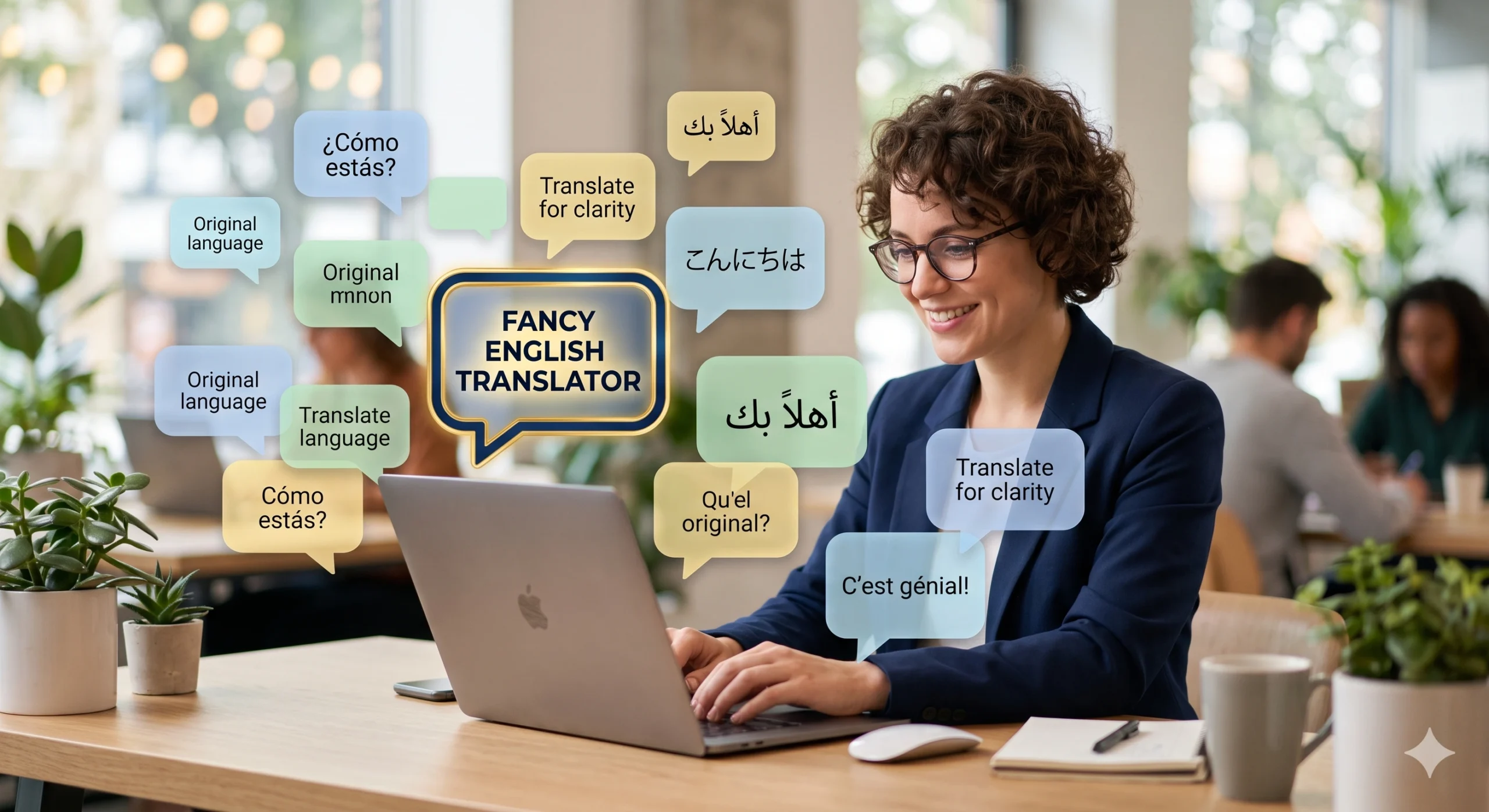
A Fancy English Translator is a free, AI-powered writing tool that instantly converts plain modern English into elegant, elevated, or stylistically ornate prose — without changing the meaning of your original text. You choose a style (Modern Fancy, Ultra Fancy, Poetic, Old English, Funny-Long, or British Royal), paste your sentence, and receive a refined rewrite in seconds. It is used by students, professionals, speechwriters, content creators, and roleplayers who want their words to carry more weight, wit, or aristocratic flair.
What Is a Fancy English Translator?
A Fancy English Translator is an in-language stylistic rewriter — not a cross-language translation engine. While traditional engines like Google Translate or DeepL convert text between entirely different tongues, a Fancy English Translator stays within English but dramatically transforms the register, vocabulary, sentence structure, and rhetorical tone of your writing. For those interested in historical variations, you can compare this to our Old English Translator which does cross-era translation, or our historical language tools home page to see how English evolved.
The output replaces common words with elevated synonyms, lengthens short clauses into more ceremonial constructions, and adds modifiers, qualifiers, and literary devices that give your prose a polished, high-society quality. The sentence “I am happy” becomes, for instance, “I find myself suffused with an abundance of joy and a most profound sense of contentment.”
Unlike historical tools that reconstruct actual Old English (Anglo-Saxon, spoken c. 450–1150 AD), the Fancy English Translator focuses on modern elevated diction — the kind of language associated with Victorian correspondence, Edwardian novels, formal speeches, and aristocratic wit.
It sits at a specific point on the stylistic spectrum, bridging the gap between everyday speech and theatrical historical styles:
| Style | Era / Register | Best For |
|---|---|---|
| Fancy English | Modern elevated prose | Emails, speeches, creative writing, social posts |
| Old English (Anglo-Saxon) | 450–1150 AD language | Historical research, Tolkien-style names (What is Old English) |
| Shakespearean / Early Modern | 1590–1610 theatrical register | Drama, literature studies, roleplay (Shakespeare Converter) |
| Medieval / Middle English | 1150–1500 AD register | Historical fiction, Chaucer contexts (Translate English to English) |

The 6 Fancy English Translation Styles — Explained
Our fancy english translator offers six distinct output styles, each calibrated for a different use case. Understanding which style to choose will dramatically improve your results.
🎩 Modern Fancy
The default. Replaces everyday vocabulary with more formal synonyms and expands simple sentences into more elaborate constructions. Suitable for most professional and creative contexts. Input: “I need your help.” → Output: “I find myself in the position of earnestly requiring your most gracious assistance.”
✨ Ultra Fancy
Maximum ornamental density. Sentences grow significantly longer, rhetorical flourishes multiply, and every clause is dressed in its finest. Best for theatrical speeches, comedy, or occasions where excess is the point.
🌸 Poetic / Lyrical
Introduces lyrical cadence, metaphor, and imagistic language. Suited for wedding speeches, poetry-adjacent captions, anniversary messages, and any writing where emotional resonance matters as much as clarity.
📜 Fancy Old English
Adds archaic flavour — “thee,” “thou,” “dost,” “verily,” “prithee” — without requiring the absolute grammatical rigor of genuine Anglo-Saxon. Ideal for fantasy roleplay, medieval-themed events, and historical cosplay contexts.
😂 Very Funny and Long
The comedic variant. Takes the “Super Duper Long” concept to its limit — sentences sprawl magnificently across many clauses, layering absurd qualifiers until the original thought is gloriously buried. Perfect for social media humour.
👑 British Royal / Posh
Channels Downton Abbey-era formality. Understatement, passive construction, polite distancing, and the quiet assurance of those who have never needed to raise their voices. Suited to formal invitations and diplomatic tone.
How Does a Fancy English Translator Work?
Modern AI-powered Fancy English Translators, including ours, use a combination of large language model (LLM) inference, lexical substitution, and style transfer techniques drawn from natural language processing (NLP) research.
The process at a high level:
- Semantic parsing — the model identifies the core meaning, entities, and intent of your input sentence.
- Register mapping — based on the style you selected, the model applies a target register profile (formal, archaic, poetic, humorous).
- Lexical elevation — common words are replaced with higher-register synonyms from the model’s vocabulary (e.g., “use” → “employ,” “happy” → “suffused with contentment”).
- Syntactic expansion — short clauses are expanded with subordinate phrases, appositive constructions, and rhetorical modifiers.
- Style-constrained decoding — the output is constrained to preserve the original meaning while maximising stylistic alignment with the target register.
The result preserves your original intent while transforming its surface form. The key distinction from cross-language translation: no meaning is lost to language switching — only the stylistic dress of the sentence changes. You can discover the linguistic roots of these structural shifts in our guide to Old English vs Modern English.
Who Uses a Fancy English Translator — and Why
Students and Essay Writers
Students searching for a fancy English translator short version often want to elevate a thesis statement or discussion-post opening without rewriting their entire essay. A well-chosen style upgrade in an introductory sentence can shift the register of an entire piece upward, signalling academic seriousness to readers and markers alike. Use the Modern Fancy style and always review the output — the tool should inform your rewrite, not replace it wholesale.
Professionals Writing Formal Communications
Executive email follow-ups, client-facing proposals, copy letters, and diplomatic correspondence all benefit from a more considered register than casual messaging. A fancy english translator speeds up the drafting phase, giving you a polished starting point you can then personalise. Always validate tone before sending: overly ornate phrasing can misfire in casual modern business settings.
Speechwriters and Event Hosts
Wedding toasts, award ceremony introductions, graduation addresses, and ceremonial welcome remarks all benefit from more dignified language. The British Royal and Poetic styles are particularly effective for this use case, producing the warm-but-elevated register associated with memorable public speaking.
Content Creators and Social Media Managers
The Ultra Fancy and Very Funny-Long styles have found a natural home on platforms like Twitter/X, Instagram, and TikTok, where posting an absurdly over-elaborate version of an everyday sentence generates strong engagement. The comedic contrast between mundane subject matter and ornate delivery is a reliable formula for shareable content.
Roleplayers, Game Masters, and Fiction Writers
The English to Fancy Old English and Medieval styles allow game masters running fantasy tabletop RPGs, authors writing historical fiction, and LARP participants to generate convincing-sounding period dialogue without studying archaic grammar rules. If you need authentic insults for flyting duels, check our guide to Old English Insults and Slang.
Fancy English Translator vs. Competing Tools — Full Comparison
Many users arrive at a Fancy English Translator after searching for general translation tools or style rewriters. Here is how the tool category compares to the alternatives:
| Feature | Fancy English Translator | Google Translate / DeepL | LingoJam Fancy English | Grammarly / Quillbot |
|---|---|---|---|---|
| Primary purpose | Stylistic elevation within English | Cross-language translation | Character substitution / Unicode fancy text | Grammar correction + tone adjustment |
| Style presets | ✓ Multiple (fancy, poetic, ultra, royal) | ✗ Register detection only | ✗ Single output (font-style only) | Partial (formal / casual) |
| Meaning preserved | ✓ Yes (AI-powered) | ✓ High fidelity cross-language | ✗ No (visual only, no semantic change) | ✓ Yes |
| Free to use | ✓ Yes, no sign-up | ✓ Freemium (API paid) | ✓ Free | Freemium |
| Humour / length modes | ✓ Funny-Long, Ultra, Super-Long | ✗ | ✗ | ✗ |
| Old English / archaic flavour | ✓ Fancy Old English style | ✗ | ✗ | ✗ |
🔍 Note on Fancy English Translator LingoJam: LingoJam’s “Fancy Text” tools produce visually decorative Unicode characters (𝓁𝒾𝓀𝑒 𝓉𝒽𝒾𝓈) — not actual semantic English elevation. If you want text that looks decorative in font-weight, LingoJam is a quick option. If you want text that actually reads more elegantly and intelligently, our AI-powered semantic rewriter is the correct tool. They solve different problems.
Before and After — Fancy English Translation Examples
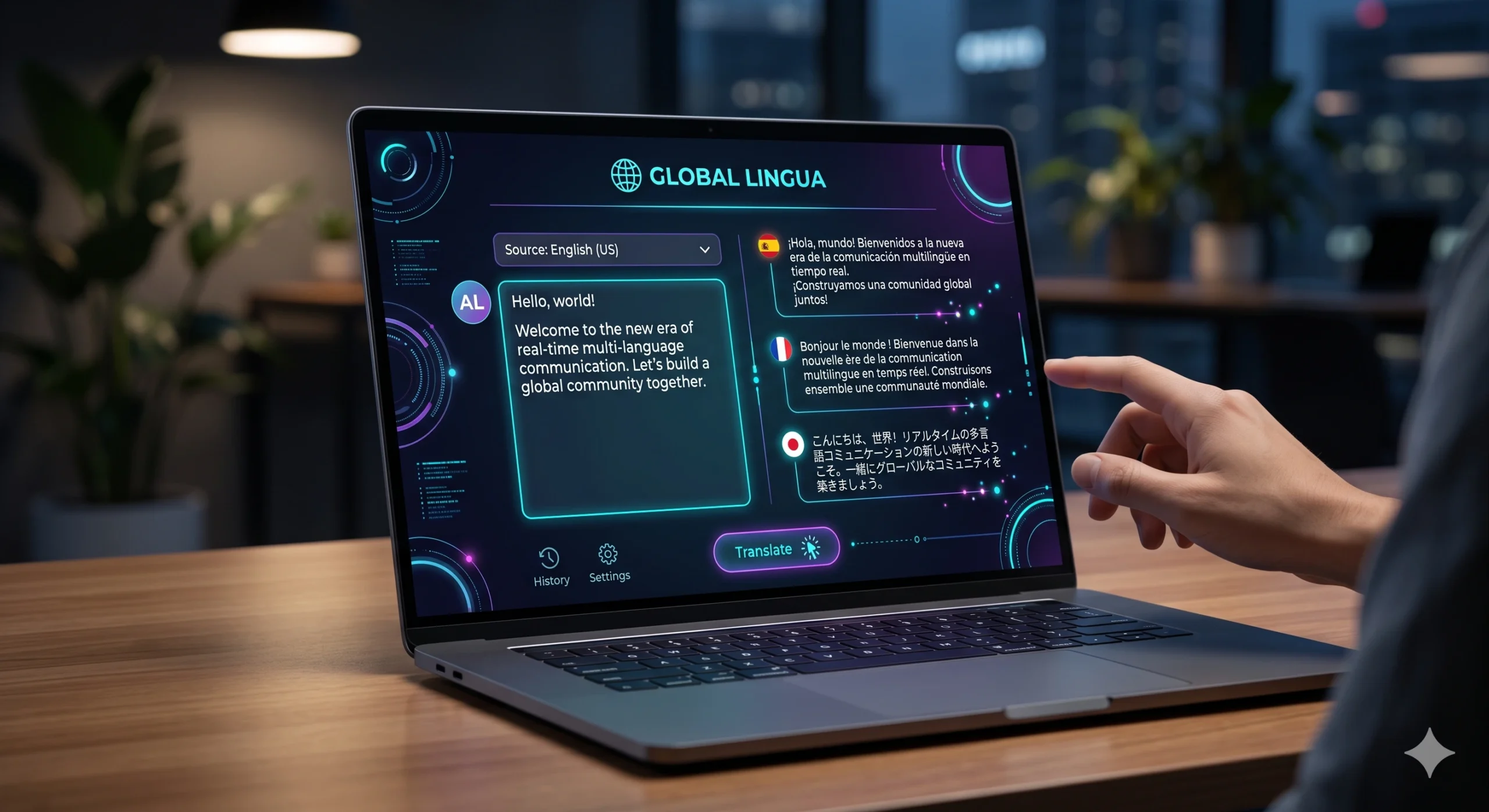
The most effective way to understand the tool is to see it in operation across different styles and use cases.
Tips for Getting the Best Results from a Fancy English Translator
- Start with clear, complete sentences. Fragments and bullet-point lists produce uneven results. Write “I want to apologise for the confusion” rather than just “apology confusion.”
- Match the style to the context. Ultra Fancy and Funny-Long are for entertainment; Modern Fancy and British Royal are for genuine communication. Mismatching will produce text that reads as parody when you want sincerity.
- Use it as a first draft, not a final draft. The output is an excellent starting point — especially for speeches and formal letters. Read it aloud, identify anything that sounds unnatural, and adjust.
- Short inputs often produce better outputs. One to three sentences at a time allows the model to focus its stylistic attention. Very long inputs can produce inconsistent register across the output.
- For the Fancy Old English style, remember this is flavour, not scholarship. For genuine Anglo-Saxon translation, use a dedicated Old English Translator tool.
- Do not paste sensitive data. Like all online writing tools, avoid inputting personally identifiable information, financial details, or confidential business content.
Frequently Asked Questions
What exactly is a Fancy English Translator? +
Is Fancy English the same as Old English? +
What is the difference between Fancy English Translator LingoJam and AI-powered tools? +
What is the “Super Duper Long Fancy English Translator” or “Ultra Fancy” style? +
Is the Fancy English Translator free to use? +
Can I translate Fancy English back into plain modern English? +
What is a Poetic English Translator? +
Is there a Fancy English Translator app for mobile? +
Ready to Elevate Your Words?
Try the Fancy English Translator free — no account, no limits, no delay.
✦ Try the Tool Free